

The complete guide
A Buyer's Guide to Cambric Dust Cover Fabric
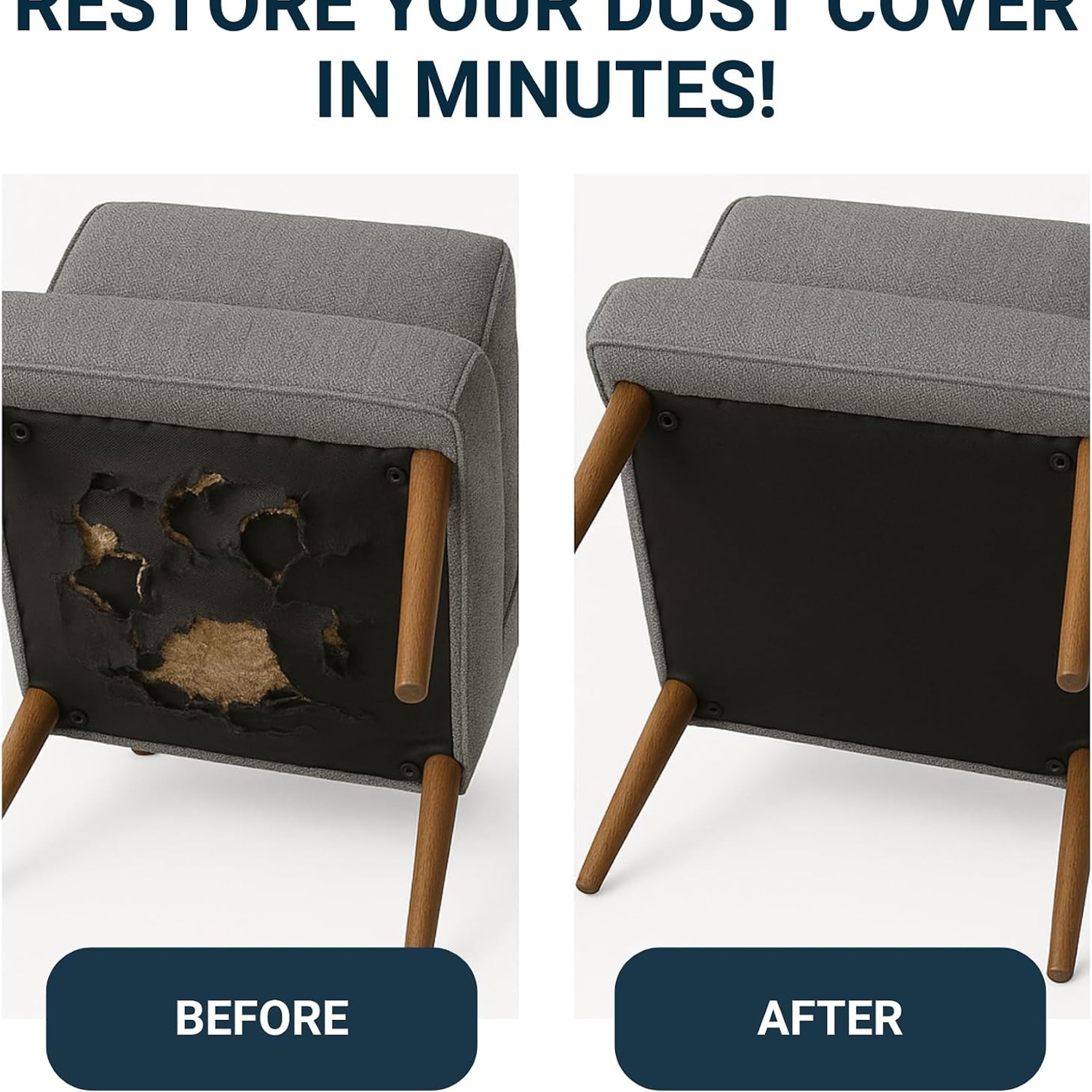
A sofa can look perfectly good from above while its bottom cover hangs loose underneath. The same thing can happen to a favourite chair or a box spring. Before treating that torn layer as a reason to replace the whole item, check what actually needs attention.
Cambric dust cover fabric is intended for that hidden finishing job. It covers the underside without replacing the visible upholstery. If the frame and supports are sound, a fresh cover can make the bottom look tidy again.
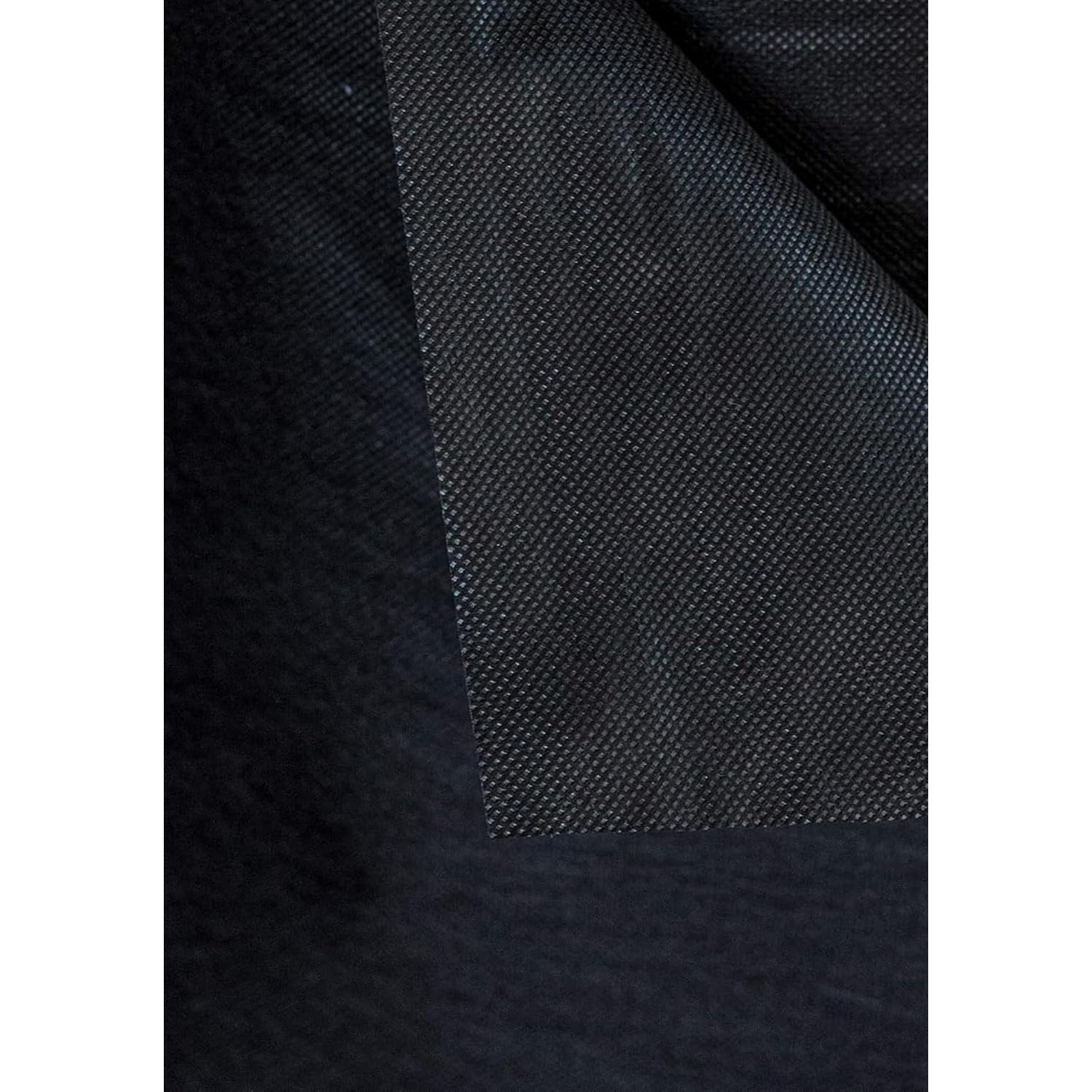
This piece is black non-woven polypropylene, supplied at 152 x 274 cm (60 x 108 in). Whether it suits your project comes down to the measurements, the furniture's condition and how you plan to attach it.
What the bottom cover does
The underside fabric has a different job from the upholstery you sit on. It finishes the area below the furniture and covers what would otherwise be an open underside. That is why upholstery underlining fabric should be chosen for its intended role, rather than treated as general-purpose seat fabric.
A torn cover and a broken support are separate problems. Replacing the fabric may improve the appearance of the underside, but it will not correct a damaged frame or worn seating support. Look beyond the loose cloth before deciding what to buy.
For a straightforward dust cover replacement, this distinction is useful. You can focus on the finishing layer without planning a full reupholstery job. If you find other damage, deal with that before covering the area again.
Understanding this piece of fabric
The supplied material is non-woven 100% polypropylene. Its stated fabric weight is 1.2 oz per square yard, and the listed item weight is 231 g.
Stretch is also listed as a feature. A little give can help when fitting material around corners and curves. The amount of stretch is not stated, though, so it should not be used to make up for a piece that is too small.
The nominal piece size is 152 x 274 cm (60 x 108 in). The maker's description also lists dimensions of 274.32 x 152.4 x 0.1 cm. For planning your project, use the supplied piece size and leave enough room for attachment edges.
You receive one piece, not a custom-cut cover. It still needs to be measured and fitted to your furniture. No tools or fixings are listed as part of the supply.
Who this fabric suits
This furniture dust cover fabric is intended for underside work on sofas, chairs and box springs. It may suit a home repair where the original bottom cloth is torn, loose or missing, while the rest of the furniture remains serviceable.
It also suits someone planning a hidden finishing layer during an upholstery project. Black upholstery lining can give the underside a consistent appearance without changing the fabric on the visible parts of the furniture.
It is not listed as fabric for seat cushions, decorative covers or outdoor protection. Waterproof performance and certifications are not specified. If your project depends on a particular tested property, get that information confirmed rather than making an assumption.
For a first repair, consider the furniture as well as the material. A small chair may be easier to inspect and handle than a heavy sofa. If the piece is awkward to move or the attachment method is unclear, ask for help before starting.
Measure the underside, not the furniture label
A description such as “two-seat sofa” or “queen box spring” does not tell you the exact size of the area you need to cover. Shapes and attachment points differ. Your measurements need to come from the actual item.
Measure the length and width of the underside, then look at where the new fabric will attach. The open area alone is not enough. The material must also reach a suitable edge so it can be secured without being stretched beyond its size.
Check for legs, brackets and changes in shape. Think through how the fabric will sit around each one before deciding where to cut. A quick sketch can help you keep track of the measurements without marking the fabric.
Compare that layout with the 152 x 274 cm piece. If you are planning several smaller covers, draw them all within that rectangle first. Do not assume that enough total area means every shape will fit.
Choosing a sofa bottom cloth
When shopping for sofa underside fabric, start with the job you want to complete. If the visible upholstery is fine and only the hidden cover needs replacing, an underside material is the relevant choice.
Next, check the details that affect fit. Piece size matters more than a broad claim about fitting sofas. A cover that nearly reaches the edges may leave too little room for attachment, even if it spans the main opening.
Material information matters too. This is polypropylene cambric with a non-woven construction, not a woven decorative cloth. Choose it for its stated underside use rather than expecting it to behave like the upholstery already on your sofa.
Finally, separate known facts from missing information. The maker provides size, composition and weight, but does not give washing instructions or a warranty. If a missing detail is important to your plans, check it before cutting.
Check the furniture before fitting
Take time to inspect the underside while it is accessible. Look at the frame and the areas where the old cover was attached. A fresh layer should not hide a problem that still needs repair.
Handle furniture carefully and make sure it is stable before working underneath or around it. Do not attempt to turn a heavy item by yourself. If you cannot get safe access, an upholsterer or furniture repair service may be the better option.
If you remove an old cover, it can help you understand the original layout. Still, use fresh measurements. A damaged or stretched old piece may no longer show the shape accurately.
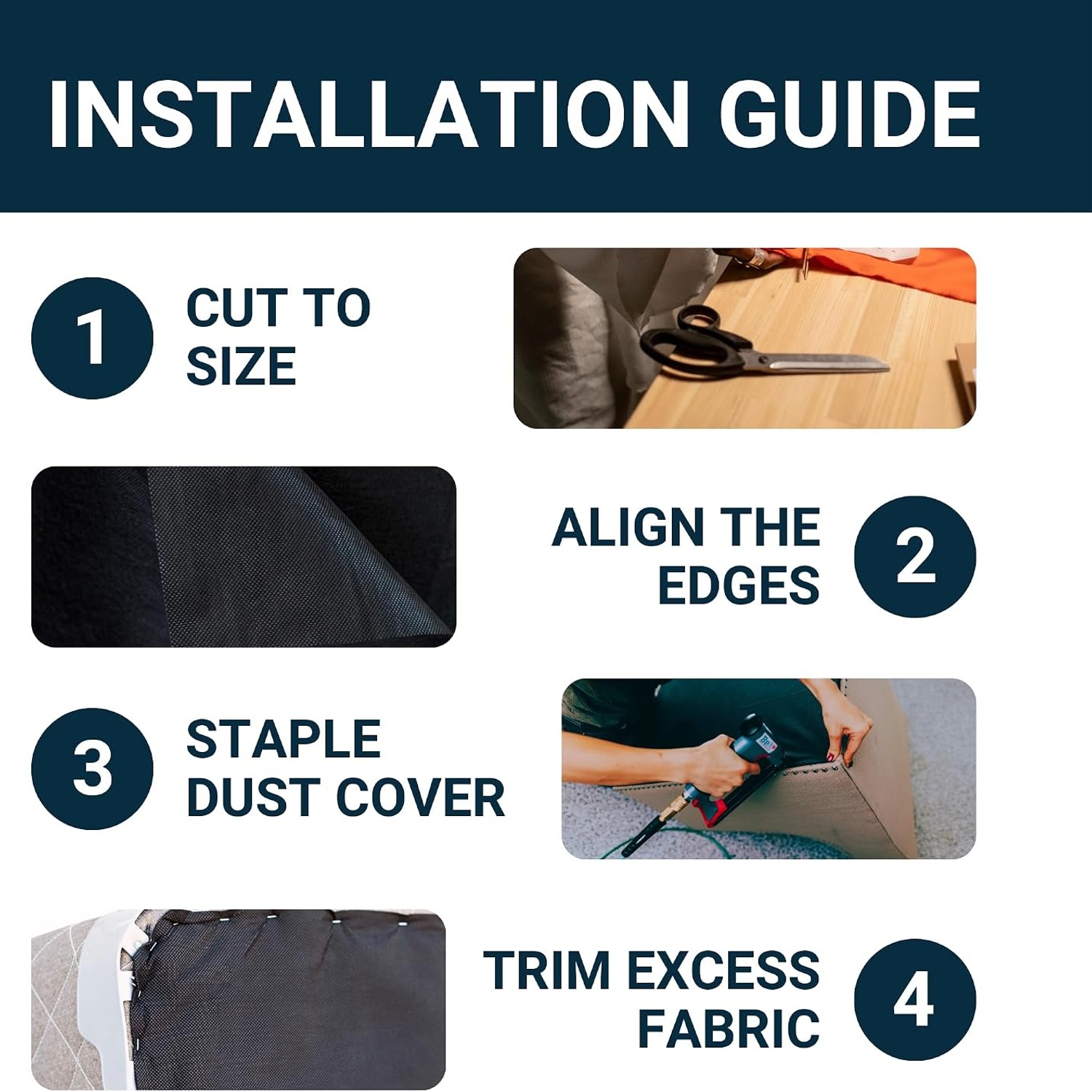
The maker does not specify a fixing method. Select one suited to the furniture rather than assuming the same approach works on every frame. Ask for advice if you are uncertain about tools or suitable attachment points.
Plan the fit before making cuts
Lay out your measurements and check them once more before cutting the upholstery repair fabric. Mark the intended shape only when you are confident that it includes the edges needed for attachment.
Aim for a neat fit rather than the tightest possible fit. The listed stretch feature may help with shaping, but there is no stated stretch percentage or fitting tension. Avoid using force to compensate for an inaccurate cut.
Pay attention to corners as you plan. Material gathered in one area can affect how it sits along the next edge. Working through the shape in advance is easier than trying to correct a cut that leaves too little fabric.
This planning stage also protects your return options. Once the fabric has been cut or used, it no longer meets the stated conditions for a change-of-mind return. Confirm suitability while it is still untouched.
Caring for the finished cover
Once installed, treat the cover as a hidden fabric layer, not a handle or a support. Avoid pulling it when moving furniture, and take care not to catch its edges with cleaning tools.
For routine care, gently remove loose dust with a soft brush. Check attachment points from time to time, especially if you notice a loose edge. Addressing a small fitting issue early can keep it from becoming a larger task.
Washing and ironing instructions are not given by the maker by the maker. Do not guess a wash cycle or heat setting based only on the material name. Seek confirmed guidance before applying water, heat or cleaning products.
If the cover becomes damaged, inspect the surrounding area before replacing it. The useful question is whether only the fabric needs attention or whether something behind it also needs repair.
Delivery, returns and project timing
A delivery lead time is not specified by the maker. Check the delivery information for your address before arranging a repair date or taking furniture out of use.
When the fabric arrives, check the piece and your planned measurements before washing, cutting or fitting it. Keep the original packaging until you have decided it is suitable. This is particularly helpful if you are buying DIY upholstery fabric for a project you have not started yet.
Returns are accepted within 14 days of delivery when the fabric is unwashed, uncut, unused and in its original packaging. The customer pays return postage. Faulty or wrongly described goods are put right free of charge.
The short version
This black cambric fabric is a finishing material for suitable sofa, chair and box spring undersides. You receive one piece measuring 152 x 274 cm (60 x 108 in), made from non-woven polypropylene with a little stretch.
Check the furniture first, measure to the attachment points and plan your cuts carefully. If the underside cover is the only part that needs attention, replacing it can be a focused repair rather than a much larger upholstery project.