
The complete guide
A Practical Guide to Choosing Mesh Fabric for Bags and Pockets
A bag pocket is less useful when you have to empty it to find one small item. A solid pocket can hide what is inside, while a heavy fabric can add more bulk than a small sewing project needs.
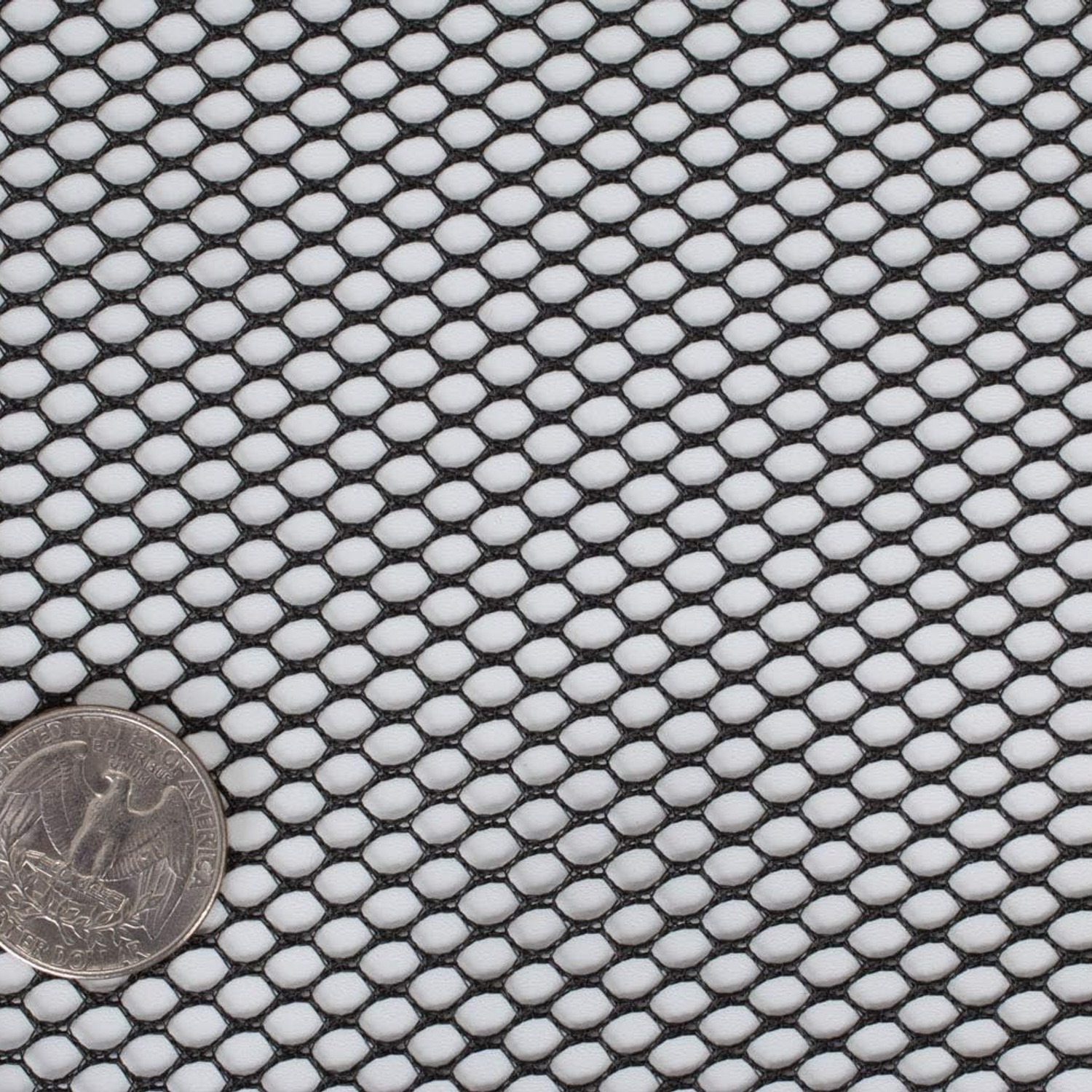
This mesh fabric offers a different approach. It is see-through, lightweight, and slightly stretchy, so it is worth considering for pockets that keep their contents in view. The black polyester mesh comes as one precut piece measuring 46 x 137 cm (18 x 54 in).
Before choosing it, think about what the pocket will hold and how your pattern uses mesh. A good match depends on more than colour. Piece size, edge finishing, and the amount of support your design needs all matter.
What this mesh does
The open structure is the main reason to choose see-through pocket fabric. You can look through the panel rather than opening the pocket to check its contents. That can be useful in a bag with several compartments, especially when each pocket has a different job.
The fabric is described as lightweight and low in bulk. That matters where a pocket joins a lining or where several layers meet at a seam. It gives you a mesh option without choosing a heavier solid panel.
There is also slight stretch for expansion. Think of this as a little give, not a measured stretch performance. The maker does not state a stretch percentage or direction, so the fabric should be checked against the needs of your pattern.
Start with the pocket's job
Before buying mesh for bag pockets, decide what each pocket needs to do. A shallow panel for keeping contents visible has different needs from a deep pocket that carries weight.
Consider the size of the items as well. The maker does not state the mesh opening size. If you plan to store very small loose objects, inspect the fabric before sewing to see whether they can pass through it. Visibility is helpful only if the pocket also keeps its intended contents inside.
This product does not give a load capacity. That makes it important to avoid treating the mesh as a rated support material. For a project that must carry heavy contents, look for a fabric and pattern with clear guidance for that use.
Know the piece size before you plan
Its size is 46 x 137 cm (18 x 54 in). Use those dimensions to check your layout before deciding whether one piece is enough.
A simple paper layout can help. Mark a rectangle at the supplied size, then place your pattern pieces within it. Keep the full cutting shapes, including seam allowances, rather than measuring only the finished pocket.
Allow for edge finishes too. A turned edge may use some of the mesh, while binding may need a different allowance. Follow the pattern rather than guessing from the finished measurements.
Do not assume every offcut will fit another pocket. A piece can have enough total area but still be the wrong shape for a long or wide panel. Check each cutting shape separately.
Match the material to your pattern
This is polyester mesh fabric with slight stretch. Those facts are useful starting points, but they do not tell you everything about how it will behave in a particular design.
Look at the material notes in your sewing pattern. Does it call for lightweight mesh, firm mesh, or a specific amount of stretch? If it gives a stretch requirement, compare that with the fabric before cutting. A description of slight stretch is not a substitute for a measured percentage.
The same care is useful when replacing a solid pocket with mesh. An open panel may change what the pocket can hold or how its edges need to be finished. Keep the intended use in mind rather than assuming all pocket sewing fabric can be swapped without changes.
Choose black with the backing in mind
Solid black mesh gives you a dark panel, but it is still see-through. The lining, contents, or fabric behind it will remain part of the finished appearance.
When planning a bag, place a sample against the intended lining if possible. Look at it both empty and with the sorts of items the pocket will hold. This helps you judge whether the visible contents suit the look you want.
Black can be an easy colour to include in a project, but the important point here is the open structure. If your design needs a fully opaque pocket that hides its contents, this mesh will not provide that effect by itself.
Plan the edges before cutting
A mesh panel needs to fit into the rest of your project, so decide how the edges will be handled before using the main piece. Your pattern may place the sides inside a seam and give the top edge a separate finish.
Binding is one possible approach when the design calls for it. An enclosed edge may be another. The maker does not prescribe a finish, so use the pattern instructions and test your chosen method.
Pay attention to the pocket opening. It needs to work with the items going in and out, not just look neat when empty. A test panel can help you check access and shape before you commit to the final seams.
Test your sewing setup
The supplied description identifies this mesh as easy to sew. Even so, a short test seam is worth doing because machines, thread, and project layers differ.
Use an offcut to try the seam you intend to make. Check that the mesh feeds through without being pulled out of shape. Then look at the seam while the fabric is relaxed and while it is gently expanded.
No needle size, thread type, or stitch setting is stated for this product. Start with your machine's guidance for mesh, then adjust from the test result. Avoid choosing settings solely because they worked on a different fabric.
If the final seam includes lining or binding, include those layers in the test. A seam in mesh alone will not show exactly how the full combination behaves.
Consider small organiser projects
Mesh for organisers can be useful when you want to see where things belong. A visible pocket may suit a sewing organiser or another small storage project whose pattern calls for lightweight mesh.
Start by choosing the contents, then size the pocket around them. Leave room for access and the edge finish, but do not rely on the slight stretch to make up for a pocket that is too small.
A trial layout is helpful here. Place the intended items behind the uncut fabric and consider where the pocket boundaries would sit. This is a planning step, not a strength test, but it can reveal whether the open fabric suits the job.
Care for the finished project
The maker's details supports machine washing and tumble drying. It does not state wash temperatures, dryer settings, or an ironing temperature. Check any care label supplied with the piece before cleaning it.
Your finished item may contain other materials with stricter care needs. A lining, binding, or added component can change how the whole project should be washed. Choose a care method that suits every part, not just the mesh.
If you plan to test washing, use an offcut where possible and check the result before cleaning a finished item. Remember that washed fabric does not meet the stated conditions for a change-of-mind return.
Inspect before you alter the piece
When the fabric arrives, keep it uncut and unused while you check it. Confirm that the supplied piece suits your pattern and inspect how its openings, slight stretch, and see-through finish work for your plans.
Keep the original packaging during this check. Returns are accepted within 14 days of delivery when the fabric is unwashed, uncut, unused, and in its original packaging. Change-of-mind return postage is paid by the customer.
If the goods are faulty or wrongly described, they are put right free of charge. Contact us with the order details and explain the problem before altering the fabric.
The short version
Choose this black mesh fabric when your project calls for a lightweight, see-through polyester panel with a little give. Bags, pockets, and small organiser projects are the main uses to consider.
Plan around one 46 x 137 cm (18 x 54 in) piece. Check your cutting layout, test your seams, and make sure the mesh suits the contents you want to store. Those simple checks will help you decide whether this piece belongs in your next sewing project.