
The complete guide
A Buyer's Guide to Black Nylon Spandex Fabric
Choosing stretch fabric can be harder than choosing a colour. A piece may look right, yet still be wrong for the pattern, too small for the layout or missing a performance detail you need. For close-fitting garments, those checks matter before the scissors come out.
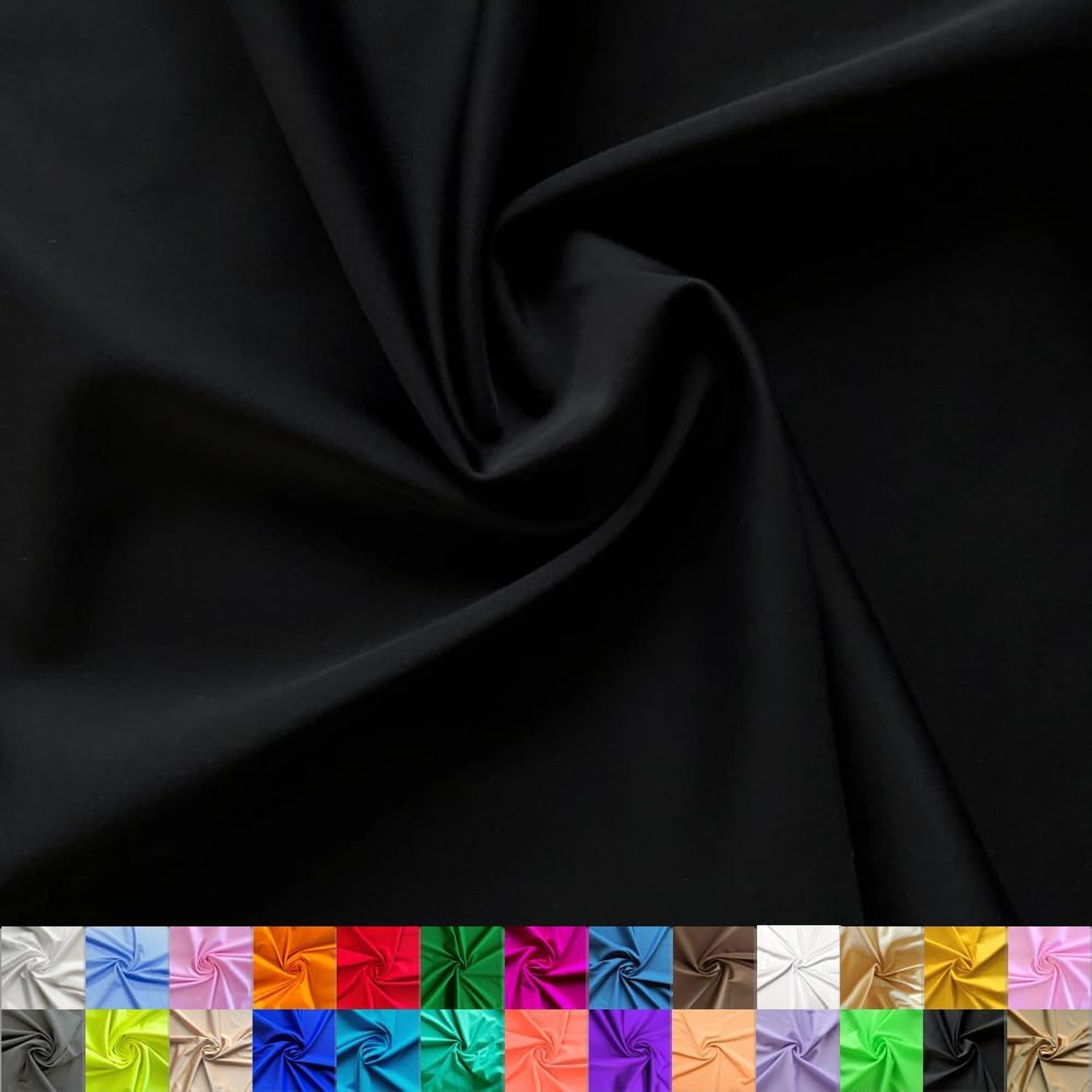
This nylon spandex fabric offers a clear starting point. It is one piece of solid black fabric, made from 80% nylon and 20% spandex, with four-way stretch. The supplied size is 1 yard (91 cm) by 152 cm. Swimwear and activewear are its stated uses.
The next step is to match those facts to your project. This guide explains what to check, what remains unknown and how to handle the fabric once it arrives.
Start with the pattern, not just the fabric
A sewing pattern should tell you what kind of material it needs. Read that section before deciding whether this piece belongs in your basket. Look for the required fabric type, stretch direction, stretch percentage and amount.
A pattern for a stable woven fabric is not the same as one written for stretch material. Swapping between them can change the fit and the way the finished garment hangs. Choose a pattern that calls for a suitable stretch fabric rather than relying on colour or fibre content alone.
This product is listed for activewear and swimwear. That makes those pattern categories a sensible place to begin, but it does not mean every design in either category will work. Let the pattern requirements guide the final choice.
What the nylon and spandex blend tells you
The composition is 80% nylon and 20% spandex. Spandex contributes stretch, while the blend provides the material for a flexible, fitted sewing project. The fabric construction is listed as tricot.
Fibre content is useful, but it does not tell the whole story. Two fabrics with the same blend can behave differently. Construction, thickness and finishing can affect how a material feels and sews. Those details are not all stated for this piece.
For that reason, avoid treating the composition as proof of a particular compression level or support. Neither is specified. If your project depends on a firm hold, a very light feel or a particular drape, ask for more information before ordering.
Understanding four-way stretch
Four way stretch material stretches along both the length and width. That is relevant to garments which need to move with the body. It also means you need to pay attention when placing pattern pieces.
The maker does not state a stretch percentage. Four-way stretch and a measured stretch percentage are different pieces of information. A pattern may need both, especially when its fit depends on the fabric stretching by a set amount.
If your pattern includes a stretch test, use it before cutting. Check the fabric against the test rather than assuming that any stretchy material will work. Follow the pattern's grain and stretch arrows even when the fabric moves in both directions.
Check the one-yard size carefully
You receive one piece measuring 1 yard (91 cm) by 152 cm. Think of that as a fixed rectangle for planning. It is not a promise that the piece will make a whole swimsuit, pair of leggings or other garment in every size.
Lay out your paper pattern within those measurements before buying. Include every panel, not just the large front and back sections. Bindings, bands and smaller pieces can take more room than expected.
Check whether the pattern allows pieces to be turned. Stretch direction can limit your layout even with a plain fabric. Also check whether seam allowances are already included in the pattern.
If you need several pieces, do not assume they will arrive as one continuous length. A project that needs an unbroken panel longer than the listed piece requires a different plan or confirmation before ordering.
Why solid black can be a useful starting point
Black nylon spandex fabric gives you a plain base without a printed motif to place or match. That can help when you want to focus on the garment shape or practise a new stretch-sewing method.
A solid colour also leaves panel lines and finishing choices to your design. You can keep the project simple or use other suitable materials where the pattern allows them.
Do not read more into the colour than the maker's description provides. Black does not prove that a fabric is opaque when stretched. The maker also does not state whether the surface is matte or glossy. If either detail is essential, check before committing to a project.
Choosing it for swimwear
Swimwear fabric needs to match the demands of the design. This piece is listed for swimwear, but the pattern may also require lining, elastic and other supplies. The fabric alone is not a complete sewing kit.
Read the pattern's materials list in full. A design may need different materials for the outer layer and lining, with separate requirements for each. Plan those purchases together so that the finished garment follows the intended construction.
Chlorine resistance and a UPF rating are not stated. Do not assume either from the swimwear description. If you need fabric with a documented performance rating, seek that information before buying rather than relying on the intended-use label.
Choosing it for activewear
Activewear sewing fabric needs vary with the garment. A loose top and close-fitting leggings place different demands on the material. Start with the pattern's requirements, then consider how you expect to wear the finished piece.
For fitted garments, opacity under tension deserves a close check. The maker does not state opacity for this fabric. Once you receive it, assess that before cutting, while keeping it clean and unused if you are still deciding whether to return it.
The listed 260 g is an item weight. It is not a stated fabric weight per square metre, often called GSM. Do not use that number to classify the material as lightweight, medium-weight or heavyweight.
Preparing for a stretch-sewing project
Before you begin, read your machine manual and pattern instructions. Choose a needle and stitch suitable for the fabric, then test on an offcut after you have decided to keep the piece.
Watch how the test seam behaves when gently stretched. Check for skipped stitches, broken thread and puckering. Adjust your setup according to your machine guidance rather than pushing ahead with a seam that does not move as needed.
Support the material while sewing so it is not hanging heavily from the table. Avoid pulling it through the machine. Let the feed system move it while you guide the edges.
An overlocker is not specified as a requirement for this product. Whether you need one depends on your pattern and the stitches your machine can make.
Inspect before washing or cutting
When the fabric arrives, check the piece before starting work. Keep the packaging while you make that decision.
This is also the time to look again at any missing information. If the fabric's feel or stretch does not suit your needs, do not cut a trial panel just to find out. Cutting changes its eligibility for a change-of-mind return.
The return window is 14 days from delivery. Fabric must be unwashed, uncut, unused and in its original packaging, and the customer pays return postage. Faulty or wrongly described goods are put right free of charge.
Care for the fabric gently
The product details specify hand wash only. Use cold water and mild detergent, and avoid bleach and fabric softeners. Handle the fabric gently rather than pulling or twisting it hard.
Air dry without stretching it out of shape. Store it folded, and keep it away from rough surfaces that could catch or damage it. These simple habits suit a fabric whose stretch is important to the finished project.
When combining materials, check the care needs of the lining, elastic and trims as well. A finished garment needs a care routine that suits all its parts. If the instructions conflict, resolve that before sewing everything together.
Buying for someone else
A piece of stretch fabric can be a thoughtful gift for a person who already enjoys sewing. The safest approach is to ask what they plan to make and whether a one-yard piece will fit the pattern.
For a surprise gift, remember that fabric choice is personal and practical. The recipient may need a particular stretch percentage, colour finish or larger piece. The maker does not supply every detail they might need.
Keep the packaging and consider delivery timing in relation to the return window. Delivery timing is not specified by the maker, so check the available delivery information when ordering in Canada.
The short version
Choose this solid black nylon spandex fabric when your pattern calls for a suitable four-way stretch material and fits within a 91 cm by 152 cm piece. Its stated blend is 80% nylon and 20% spandex, with tricot construction and hand-wash care.
Check the unknowns that matter to your project, especially stretch percentage and opacity. Then inspect before washing or cutting. A little planning now gives you a clearer path from a single piece of fabric to a garment you have chosen with care.