
The complete guide
A Practical Guide to Choosing Navy Cotton Fabric
Finding a fabric you like is only part of planning a sewing project. You also need enough length, the right width and a material that fits the pattern. A plain navy can be useful when you want a calm colour beside a print, but colour alone will not tell you whether a piece will work.
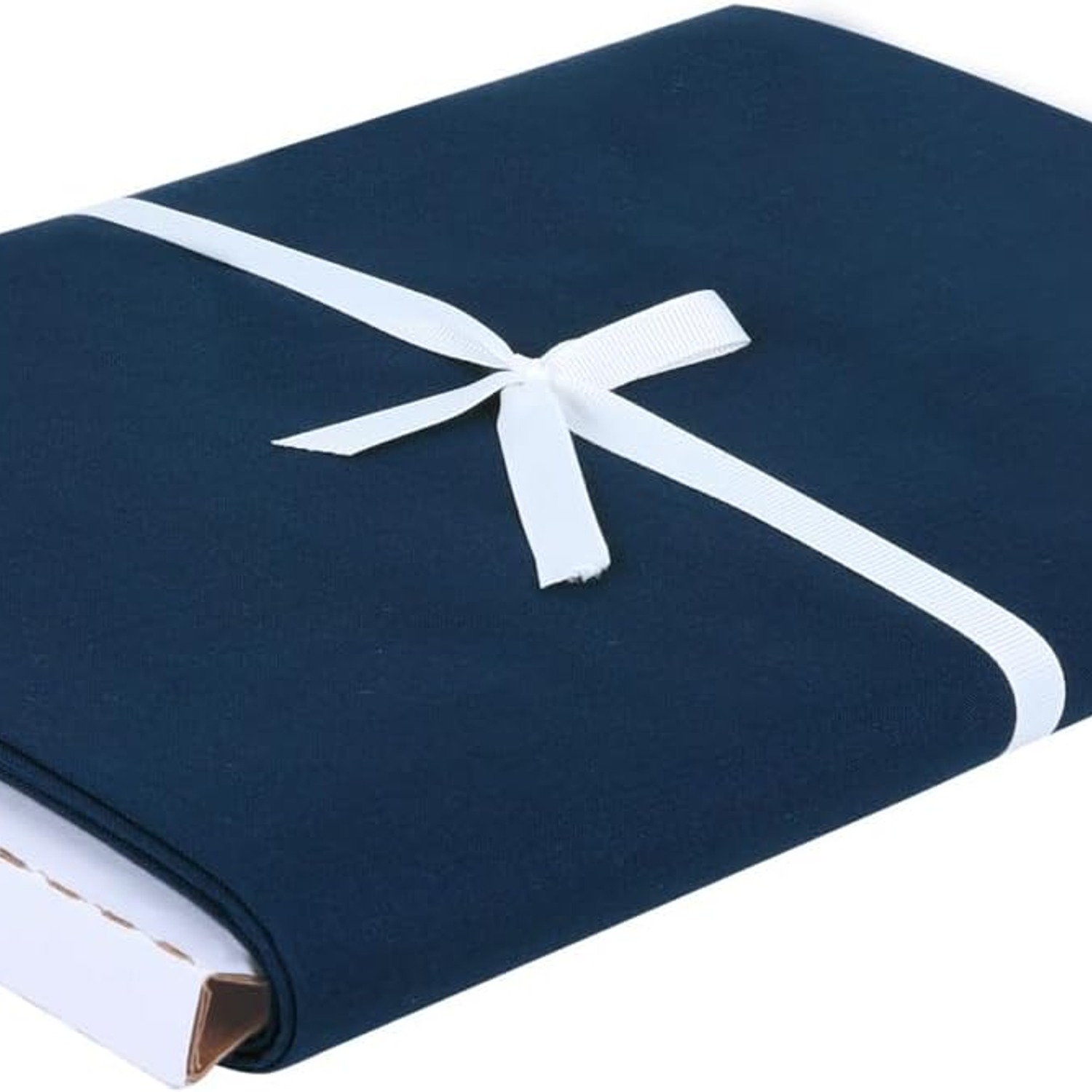
This cotton fabric comes as one piece measuring 3 yards (2.74 m) long and 112 cm (44 in) wide. It is described as 100% cotton with a plain weave and a solid Navy Peony colour. That gives you a clear place to start, whether you are planning patchwork, a bag lining or a cushion cover.
The next step is to compare those details with the project you have in mind.
Understand what the pack includes
Although the heading uses cotton fabric by the yard, this is a fixed pack. That distinction matters if your pattern needs more fabric or calls for a wider cloth.
Work from the stated buying size of 3 yards (2.74 m) by 112 cm (44 in). Do not assume that ordering a pack gives you extra cutting allowance beyond those measurements. Your layout needs room for seams, any edges you will trim away and possible changes after washing.
One continuous piece lets you decide where to place large panels and where smaller shapes can fit around them. Before cutting, sketch a rough layout on paper. It is much easier to change a pencil line than to replace a section cut too soon.
What plain-weave cotton brings to a project
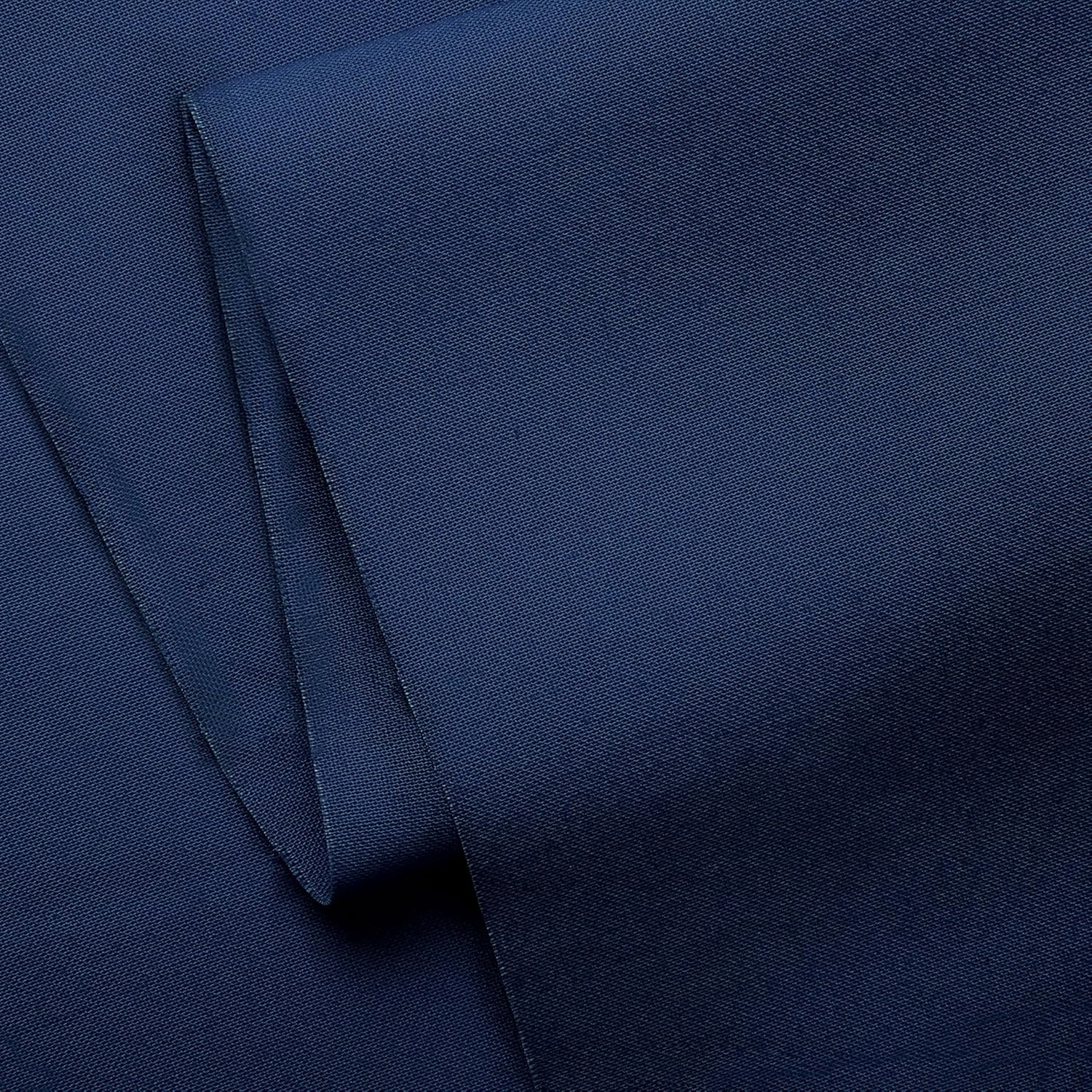
Plain weave describes a simple structure in which yarns pass over and under one another. Here, that structure is paired with a solid colour rather than a printed design. You do not have printed motifs to centre or stripes to line up at a seam.
This can make solid cotton fabric a useful choice for projects where shape and stitching do the visual work. A plain border can frame patchwork, while a solid lining can give the inside of a bag a different look from its outer fabric.
The maker does not give a GSM figure, a measured drape or a stretch percentage. Those gaps matter when a pattern depends on a certain fabric weight or stretch. Treat the cotton content and weave as starting facts, not proof that it will suit every sewing task.
Use navy as part of your colour plan
Navy can act as the main colour or as a quiet partner to a busier fabric. In patchwork, you might repeat it through several blocks to connect different prints. For a cushion, you might use it on both sides or pair it with a contrasting panel.
The listed shade is Navy Peony. That name helps identify the option, but it does not guarantee a match to another navy you already own. Different screens, room lighting and nearby colours can change how a shade looks.
If a close match matters, compare the actual fabrics before committing to the project. Lay them together in the light where the finished item will be used. For a washable piece, also consider a colourfastness test before combining dark fabric with pale sections.
Plan quilting cuts before you start
Navy quilting fabric can serve several roles in the same quilt. It may become a border, sashing between blocks or binding around the edge. Each role uses the available fabric differently, so begin with the quilt pattern rather than a general guess.
For borders, check whether the pattern expects long unjoined strips or allows pieced strips. For binding, calculate the total length needed around the quilt, including the extra required for joins and finishing. Strip width also changes how much fabric the task uses.
If you are choosing fabric for patchwork, count the pieces and include their seam allowances. Arrange larger shapes first, then see whether smaller pieces fit into the remaining areas. Keep a little room for correcting a cut rather than planning to use every last edge.
Check dressmaking patterns with care
Apparel is among the listed uses, but dressmaking cotton fabric still needs to match the demands of the pattern. Look for the recommended fabric types and the yardage table for the relevant width. A layout designed for wider fabric may not fit within 112 cm.
Also consider how the garment is meant to sit. A design that needs stretch, a very fluid drape or a firm structure may call for something different. The maker does not provide those measured properties, so avoid filling in the gaps with assumptions.
Before buying for clothing, check the largest pattern pieces as well as the total yardage. A piece may contain enough area overall but still be too narrow for a particular panel. Pattern placement, grain direction and seam allowances all affect the final fit.
Think through bags and home projects
Bag linings and cushion covers are suggested uses for this fabric. Both can be manageable projects, but each needs a cutting plan. A cushion cover requires more than the face measurement of the cushion because seams and the closure take up fabric too.
For an envelope closure, allow for the overlapping back panels. For a zip closure, follow the pattern's extra allowances. If you are using navy fabric for cushion covers as part of a matching set, calculate every cover before cutting the first one.
A cotton bag lining fabric also needs to fit the intended bag design. Pockets, divided sections and shaped bases can add pieces that are easy to overlook. Follow the pattern's advice about support materials rather than expecting the cotton alone to provide every kind of structure.
Make room for embroidery and smaller crafts
Cotton fabric for embroidery gives you a plain surface on which stitching can stand out. The thread colour, stitch density and size of the design will affect the result. Test your chosen setup on a small piece before stitching the main panel.
A sample can help you judge needle choice and whether your design needs stabiliser. It can also show how the fabric looks after pressing. These checks are useful when a stitched panel will later become part of a cushion, pouch or other sewn item.
Smaller projects can make good use of leftovers, but save them after planning the main cuts. It is tempting to trim off a handy scrap early. That same area may be needed later for a border join, pocket or test piece.
Decide whether to prewash
Machine washing is listed in the product details. A wash temperature, drying method and measured shrinkage rate are not given by the maker. Check any care information that arrives with the fabric before choosing settings.
For a project that will be washed after use, prewashing can help you assess the cloth before final measuring and cutting. Cotton may change size after washing, and dark colours deserve care when they will sit beside lighter fabrics. Do not assume an exact shrinkage allowance that has not been stated.
There is a practical order to follow. First inspect the fabric and decide whether you want to keep it. Then consider testing and washing. Washing changes its eligibility for a change-of-mind return, so that decision should come before preparation.
Measure, mark and cut with a plan
Once you are ready to keep and prepare the fabric, check the usable measurements for yourself. Smooth it out without pulling it out of shape. Follow your pattern's grain markings and keep each piece within the available width.
Use a marking method you have tested on a small area. Work on a surface large enough to support the section being cut, rather than letting its weight pull at the edge. Taking your time here can prevent uneven pieces and avoidable waste.
Label pieces that look alike but have different jobs. This is especially helpful with plain navy, where the absence of a print can make similar shapes hard to tell apart. Keep remaining fabric until the project is finished in case you need another small part.
Check delivery and return details first
No delivery lead time is stated in the maker's description. If the fabric is for a dated event or a gift project, check the delivery information for your address before ordering. Leave time for inspection, preparation and sewing as well as shipping.
Returns are available within 14 days of delivery when the fabric is unwashed, uncut, unused and in its original packaging. The customer pays return postage. Keep the packaging while you decide whether the colour and fabric suit your plans.
Faulty or wrongly described goods are put right free of charge. Inspect the piece before starting work, and raise any concern before washing or cutting it. That keeps the condition clear and avoids spending time on a project with fabric you may need to return.
The short version
This is a single piece of navy cotton, 3 yards (2.74 m) long and 112 cm (44 in) wide. Its solid colour and plain weave make it worth considering for quilting, sewing and craft patterns that call for this type of fabric.
Choose it by matching the pack to your cutting plan, not by colour alone. Check width, yardage and care needs, then inspect it before making permanent changes. A little planning at the start leaves you better placed to enjoy the sewing itself.