
The complete guide
Choosing Cotton Quilt Batting for Your Next Sewing Project
A quilt top can look finished long before it feels like a quilt. Without a filling layer, the top and backing may not have the softness or body you had in mind. Cotton quilt batting provides that middle layer, ready to be held in place by your quilting stitches.
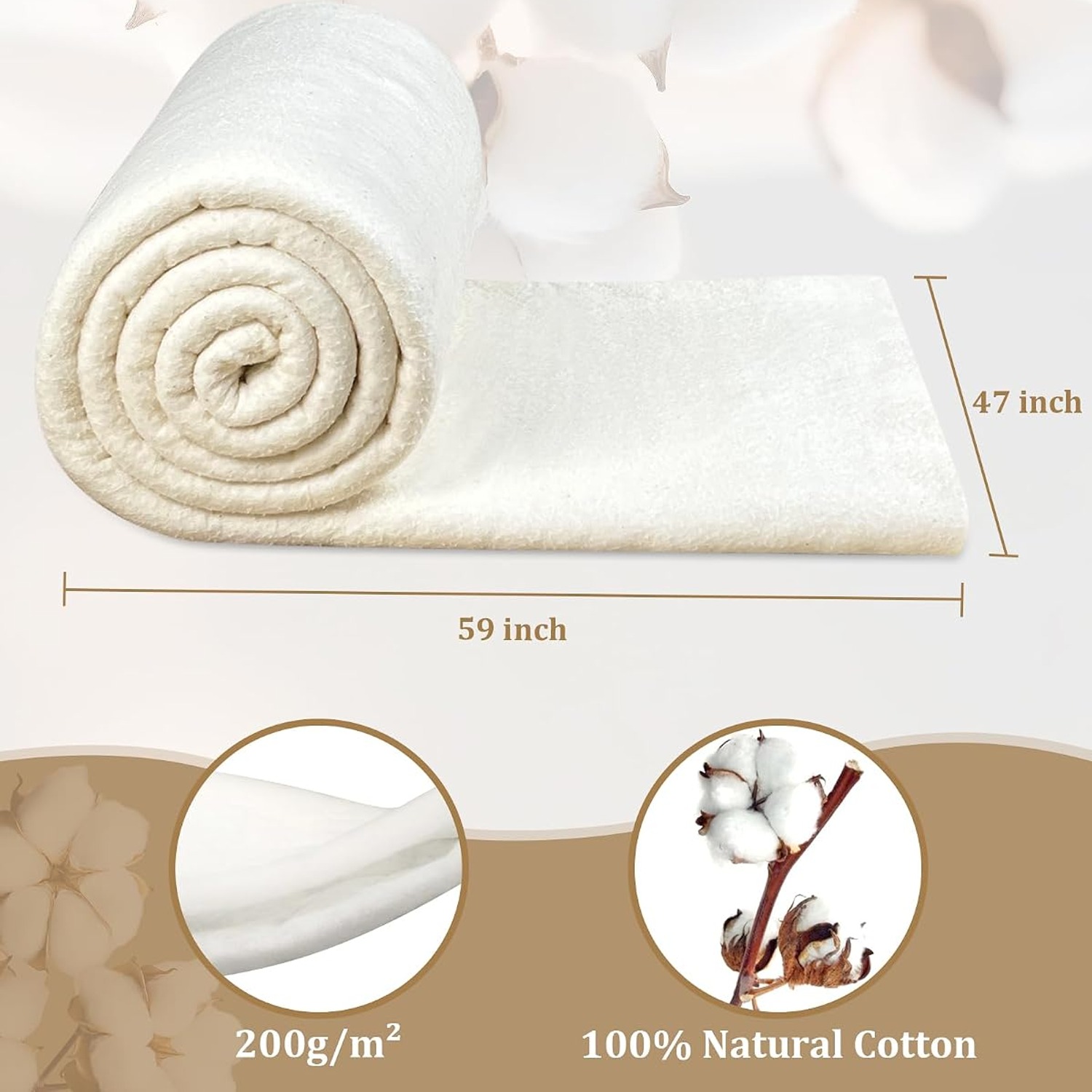
Choosing it starts with a few practical checks. You need enough material for your project, a feel that suits the finished piece, and care instructions that work with your fabrics. This piece measures 119 x 150 cm (47 x 59 in). Knowing that fixed size helps you decide whether it belongs in your sewing basket before you start cutting.
What quilt batting does
A quilt usually brings together a pieced or plain top, a filling layer and a backing. The batting sits in the middle. Quilting stitches pass through the layers to hold them together and create the surface pattern.
That middle layer affects how the finished work feels in your hands. It adds body beneath the fabric and gives the stitching something to shape. The result also depends on your top fabric, backing and quilting pattern, so batting alone does not determine the final finish.
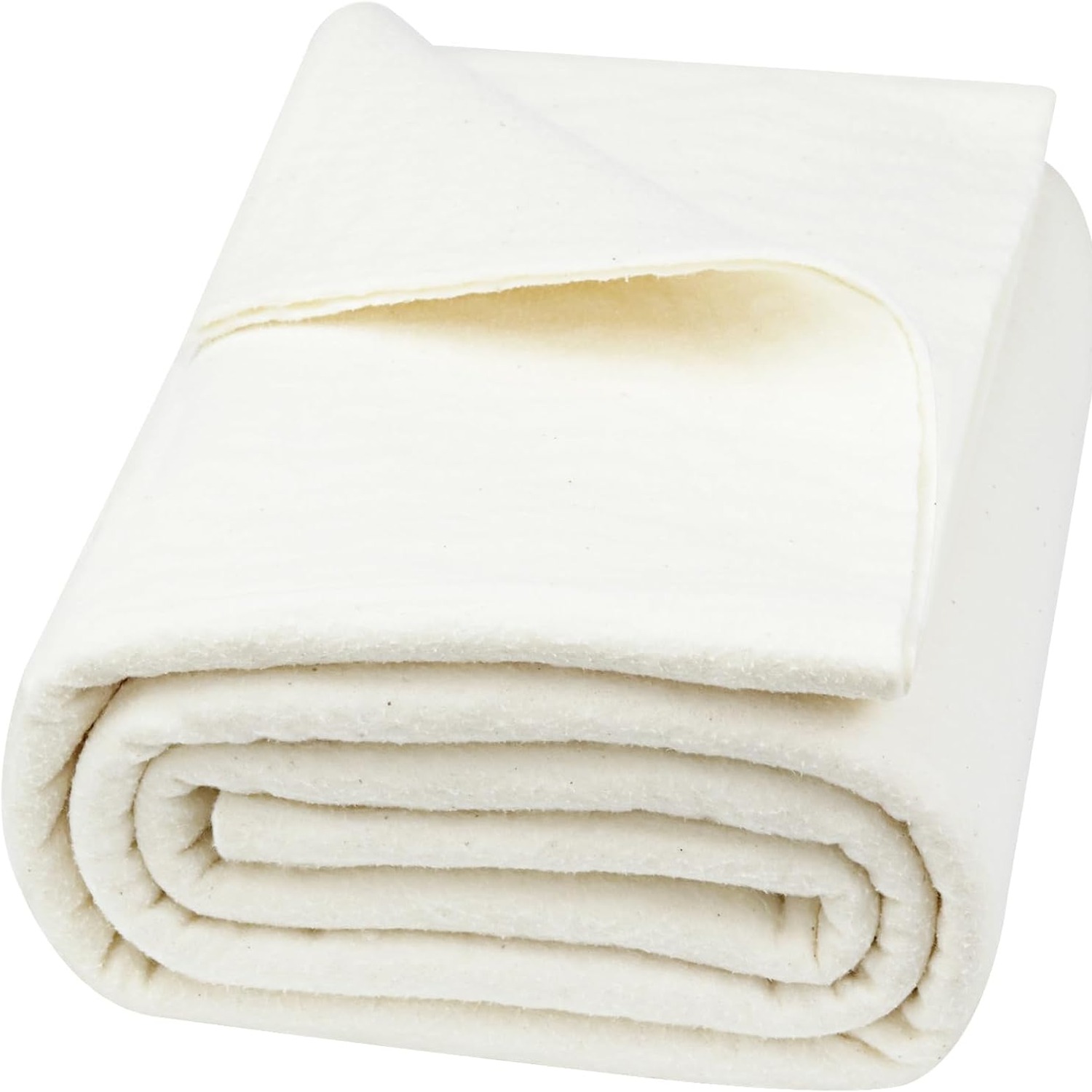
This natural cotton batting is described as soft, warm and lightweight. It has an even texture intended for cutting and layering. Those are useful starting points, but a small stitched sample will tell you more about your own fabric combination than a description can.
Understand the size before choosing
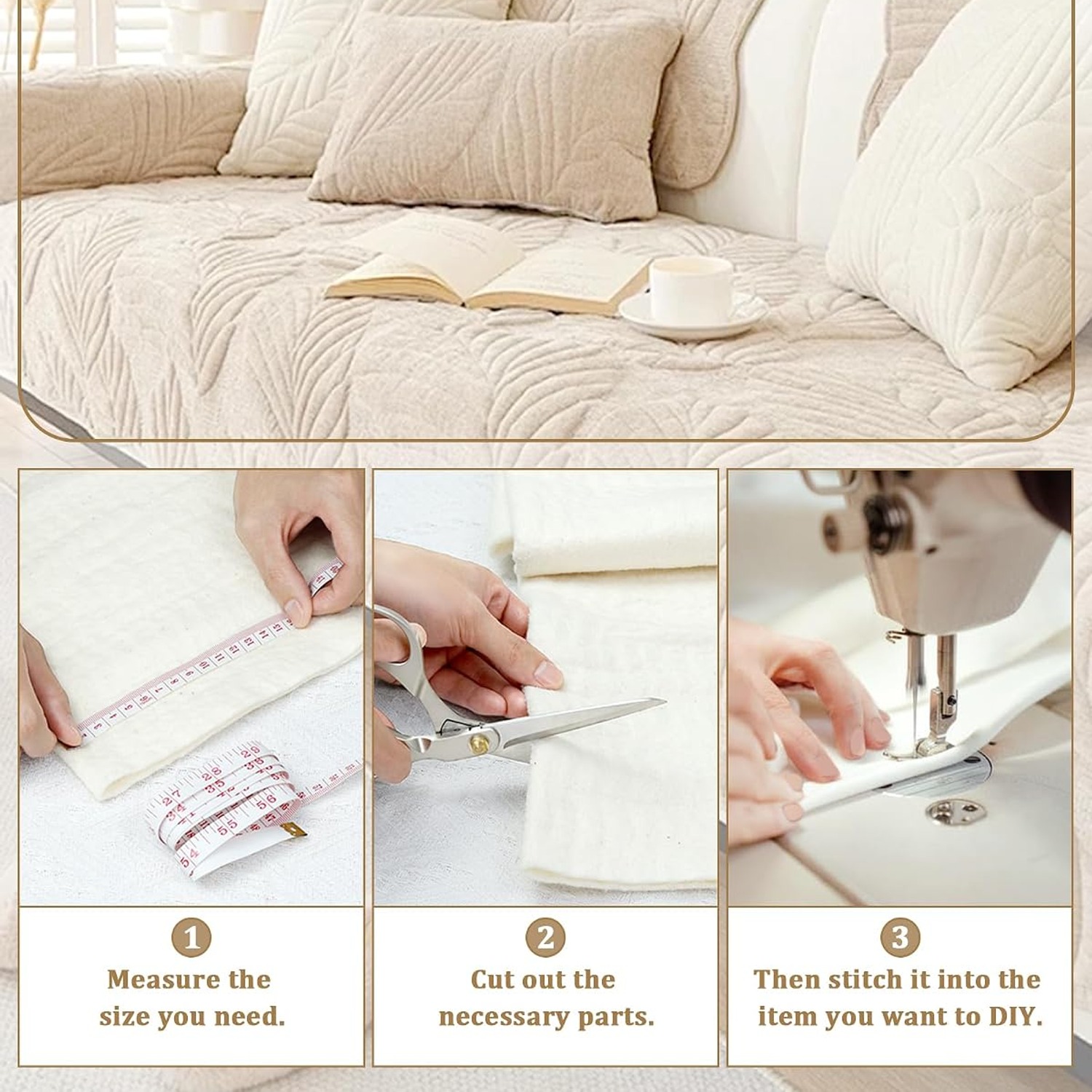
This product supplies one piece, not a roll or a length cut to your request. The piece measures 119 x 150 cm (47 x 59 in). Begin with the batting measurements in your pattern rather than the finished quilt dimensions.
Many quilting methods need extra material beyond the edges of the quilt top. That margin gives you room to position the layers and trim after quilting. The amount depends on how you plan to work. If someone else will quilt the project, ask them what allowance they need before buying.
Draw a simple cutting plan on paper. Mark the full piece, then place your project shapes inside it with their required margins. This is especially helpful when using small quilt batting for several separate pieces. A layout that looks roomy in your head can become tight once allowances are included.
Do not count on stretching the batting to make it fit. Plan around the stated size and keep enough room to work without pulling the sheet out of shape.
Read the weight figures correctly
The stated weight per area is 200 g/m². You may also see this written as 200gsm cotton batting when comparing quilting supplies. It describes weight over an area, not thickness.
The listed item weight is 358 g. That is a separate figure and should not be treated as a shipping weight. Neither number tells you exactly how much loft the batting will have under your chosen stitches.
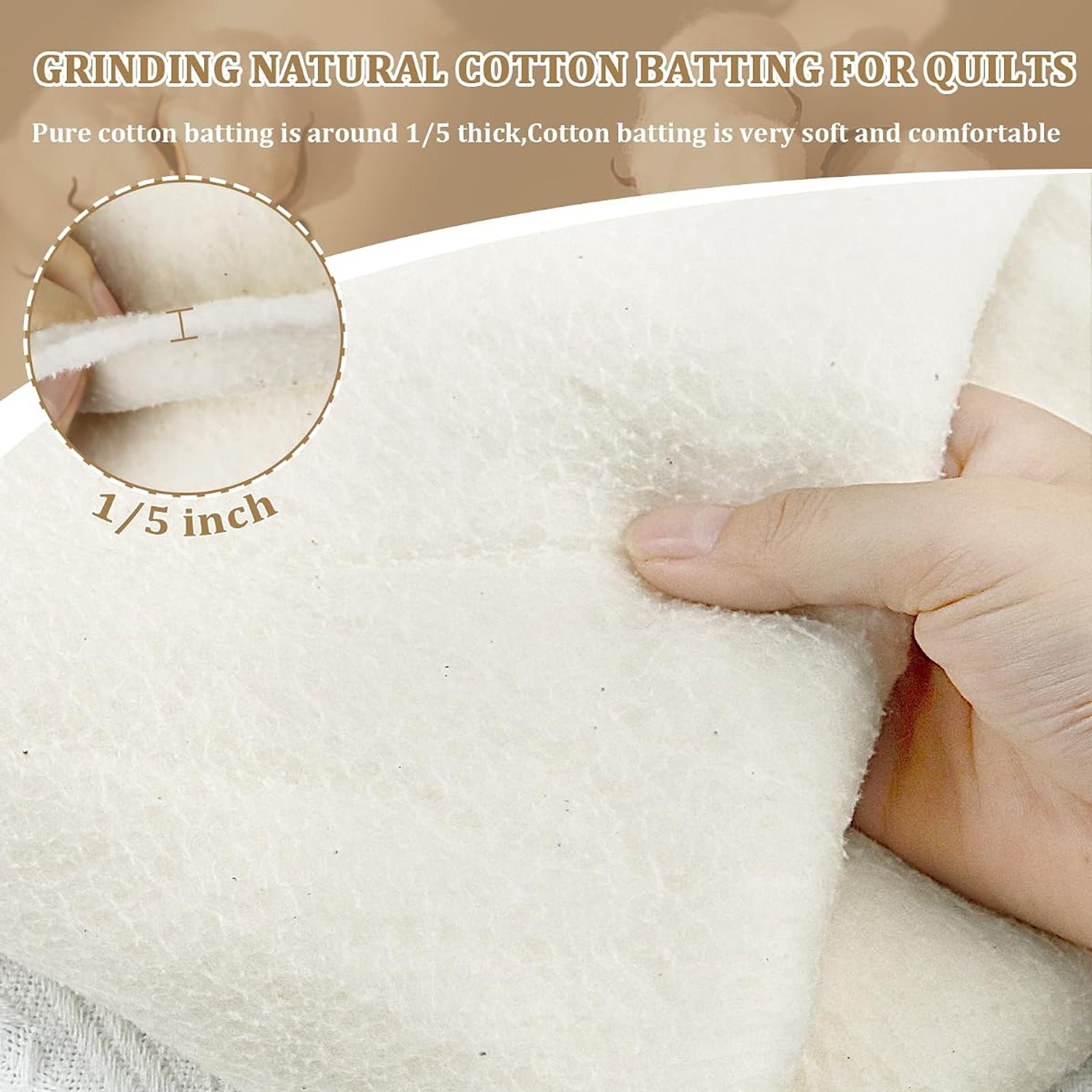
A measured thickness is not provided. There is also no stated warmth rating. If your project depends on a very specific loft, ask for more detail before ordering. Choosing by an unconfirmed thickness can lead to a different result from the one your pattern designer intended.
Match it to the project
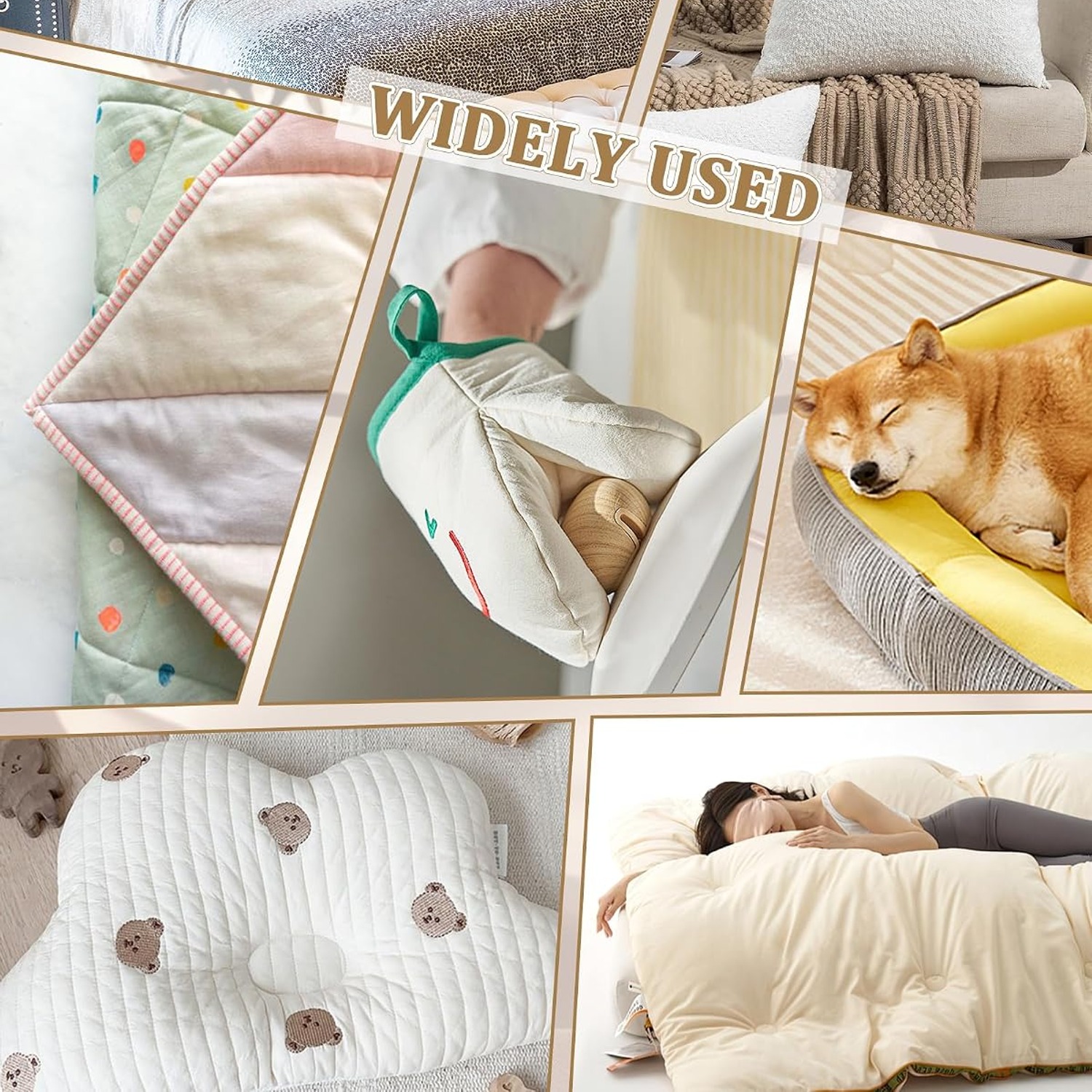
A piece this size is worth considering for smaller quilted work, provided your full batting requirement fits. A quilted wall hanging, a compact quilt or a wearable art panel can each call for a different balance of softness and shape.
For a wall hanging, think about how you want the surface to look. Closely spaced quilting and open areas can give different effects. Make a test panel if the stitching pattern is an important part of the design.
For wearable art batting, pay attention to seams and movement. Several fabric layers can become bulky where pieces meet. Fold and stitch a sample to check how it bends before you cut the main pattern.
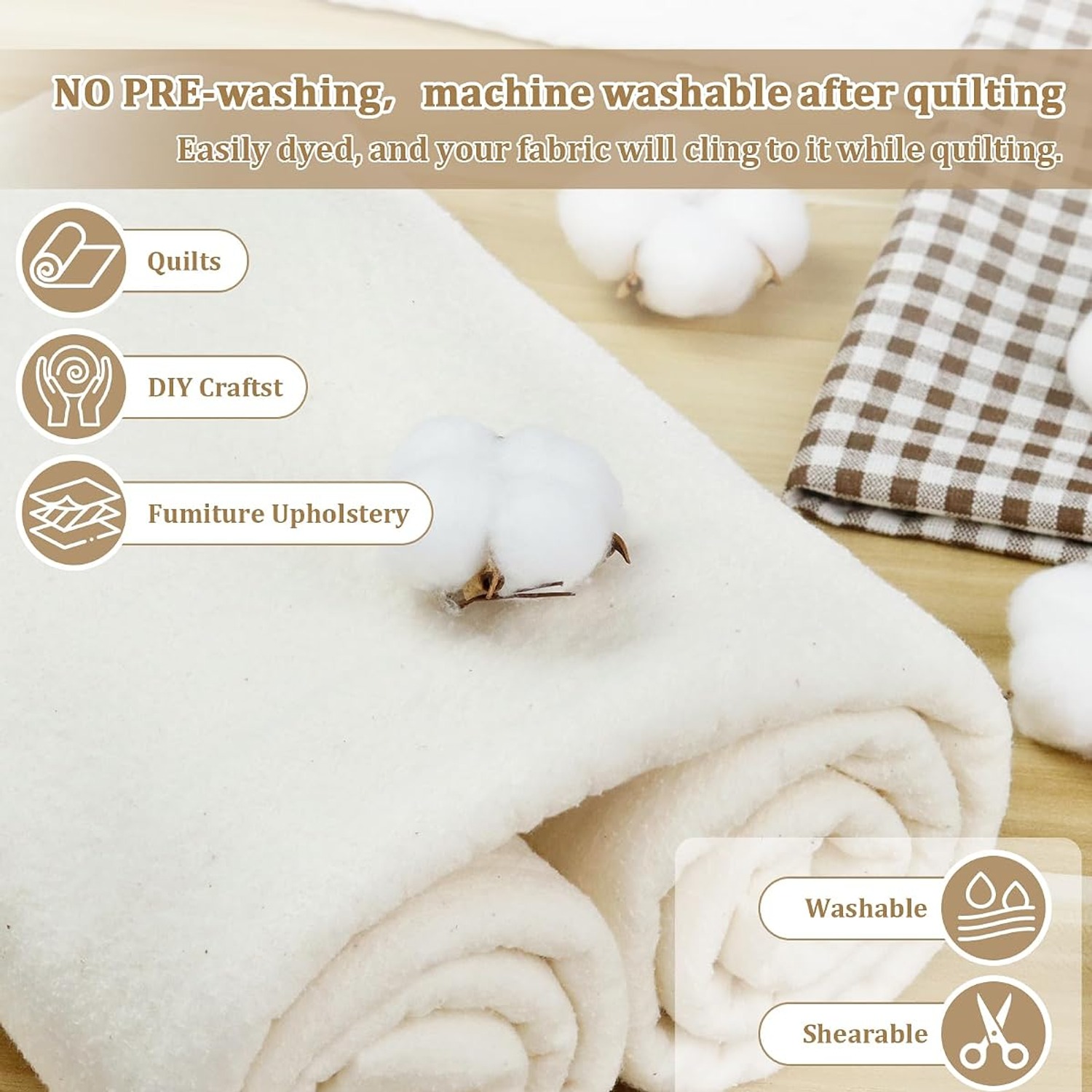
The source also mentions potholders, but it does not provide a heat-protection rating. A suggested craft use is not proof of protection from hot cookware. Microwave suitability is not stated either. Choose materials with confirmed suitability when heat exposure is part of the intended use.
Check what is known and what is missing
The product details identify the batting as cotton and list its colour as white. They do not state a country of origin or provide certifications. The word natural should not be read as a claim of certified organic production.
Some construction details are also missing. Maximum quilting distance, shrinkage rate and measured loft are not given by the maker. These gaps matter more for some projects than others.
For example, a design with large unstitched areas needs a confirmed maximum distance between quilting lines. A fitted textile project may need a reliable shrinkage figure. If either detail is central to your plan, get an answer before buying rather than hoping the material will behave a certain way.
Inspect it before cutting
Open the package carefully and keep the packaging while you check the piece.
The supplied notes explain that compression packaging can make the batting appear thin or feel less soft at first. Unfold it gently on a clean surface so you can inspect it. Avoid pulling hard at corners or trying to force it into a larger shape.
Use this stage to review your cutting layout once more. Check the direction and size of each planned piece against your pattern. A short pause here can prevent the most frustrating mistake, cutting the first section before leaving room for the next.
Build a small test sandwich
A sample quilt sandwich is a useful way to check the whole combination. Use offcuts of the actual top and backing fabrics, with a small piece of the cotton quilt filling between them.
Try the thread and needle you expect to use. Look at both sides after stitching. Check whether the layers sit as you want them to and whether the amount of quilting gives the right feel.
If you expect to wash the finished work, wash the sample using the planned method. This will not establish a guaranteed shrinkage rate for every project, but it can show how that particular combination responds. Keep any observations with your pattern so you can refer to them later.
Remember that cutting a test piece means the batting is no longer uncut. Complete your return checks before taking that step.
Cut and layer with care
Work on a clean, broad surface where the sheet can lie flat. Support the material rather than letting most of it hang over an edge. Mark the size your pattern requires, including the allowance for quilting.
Sharp fabric scissors are a straightforward option. A rotary cutter can also be used with a suitable cutting mat. Choose the tool you can control comfortably, particularly around corners or smaller shapes.
When assembling the quilt sandwich layer, smooth each part without stretching it. Secure the layers using the method suited to your project. Since the maker does not state maximum stitch spacing here, do not assume that widely separated quilting lines will provide enough support.
Keep usable offcuts clean and together. Measuring and labelling them makes it easier to see whether they fit a later small project.
Care for the finished quilt
Do not prewash the loose batting. The supplied washing advice applies after it has been secured within a finished quilt.
Use cold water and a small amount of liquid soap. The washing machine should have enough room for the quilt to move. Low tumble drying is listed, but only use it if the other parts of your project allow it.
The most delicate component sets the care limit. A trim, printed fabric or backing may need gentler treatment than the batting itself. Check those instructions before deciding how to wash the finished piece.
For a gift, include the care instructions you followed. The recipient should not have to guess how to clean handmade work. A short note can also explain any fabric-specific limits.
Plan delivery and keep your options open
If the quilt is for a birthday, exhibition or other fixed date, confirm delivery information before you commit to a sewing schedule. The maker does not state a delivery timeframe.
Allow time to inspect the batting and make a sample, not just time to sew. Discovering a size mismatch on the day you planned to start quilting can put the whole project under pressure.
Returns are available within 14 days of delivery for fabric that is unwashed, uncut, unused and in its original packaging. The customer pays return postage. Faulty or wrongly described goods are put right free of charge.
The short version
Choose this cotton quilt batting when one 119 x 150 cm (47 x 59 in) piece fits your project and its required allowances. It offers an easy-to-cut cotton middle layer for quilted work, with care guidance for washing after construction.
Check any missing specification that your pattern depends on, especially stitch spacing or shrinkage. Then inspect, plan and test before committing your main fabrics. A little care at the start gives you a clearer path from a finished quilt top to a finished quilt.